
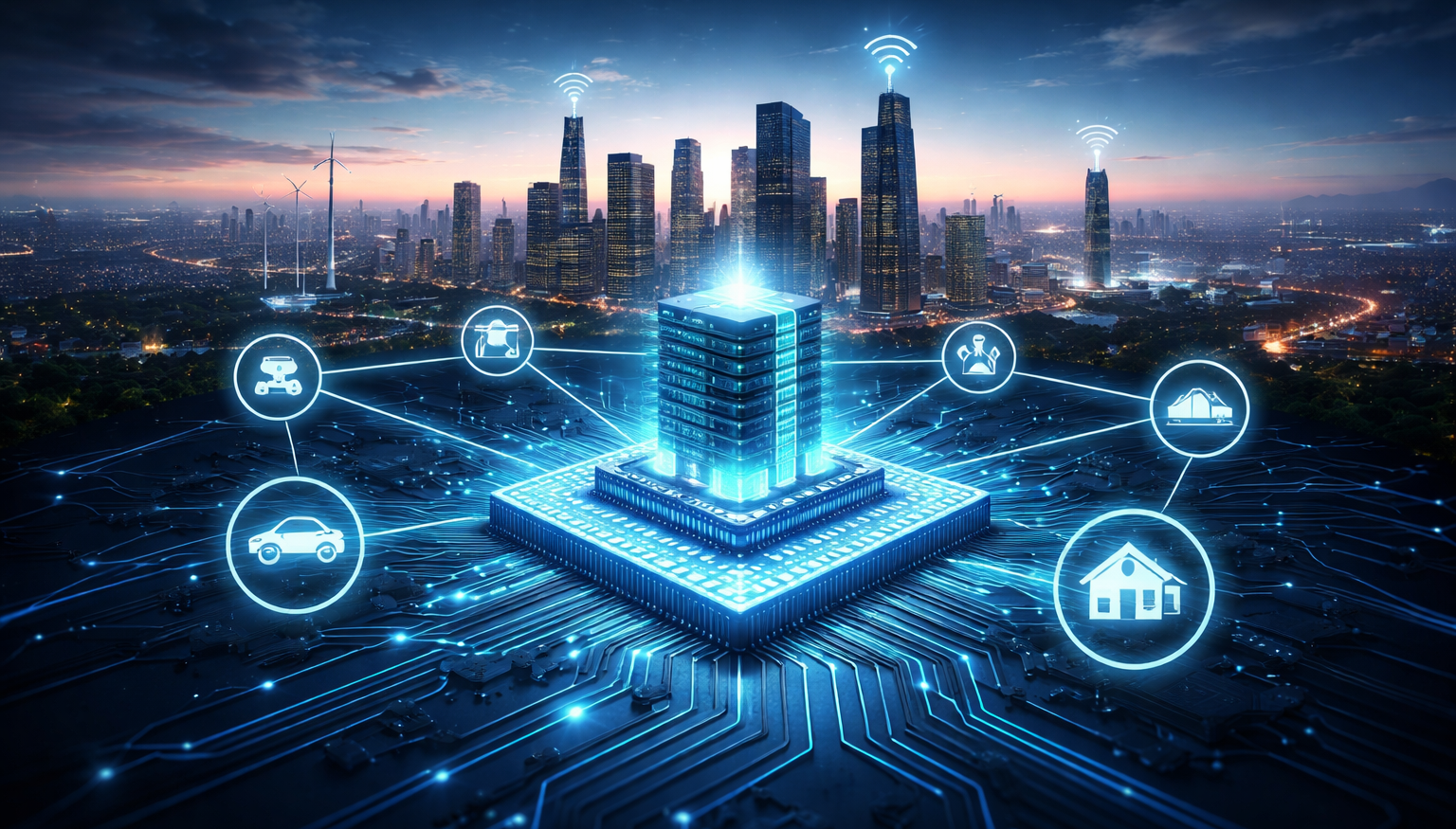
In today’s digital world, the amount of data being generated every second is enormous. From smartphones and smart homes to industrial machines and connected vehicles, billions of devices are constantly producing data. Traditionally, this data has been processed using cloud computing, where information is sent to centralized servers for analysis.
However, as technology continues to advance, cloud systems alone are not always fast enough to handle real-time data processing. This is where Edge Computing comes into play.
Edge computing is emerging as one of the most important technologies in modern digital infrastructure, enabling faster processing, reduced latency, and smarter systems.
🌐 What Is Edge Computing?
Edge Computing is a distributed computing model where data processing occurs closer to the source of data generation rather than relying entirely on centralized cloud servers.
In simple terms:
Edge computing processes data near the device or network “edge” instead of sending everything to a distant data center.
This approach improves speed, efficiency, and real-time responsiveness.
For example, instead of sending data from a smart camera to a cloud server thousands of miles away, edge computing allows the camera to process important information locally.
⚙️ How Edge Computing Works
Edge computing works by placing computing resources closer to devices that generate data.
The basic process includes:
- Data Generation
Devices such as sensors, cameras, and mobile phones produce data. - Local Processing
Edge devices or edge servers process part of the data locally. - Filtering and Analysis
Only relevant information is sent to the cloud for deeper analysis. - Real-Time Response
Systems react immediately based on processed data.
This method reduces the time required to transmit data back and forth between devices and centralized servers.
🚀 Why Edge Computing Is Becoming Important
Several technological trends are driving the growth of edge computing.
📡 Growth of IoT Devices
Billions of connected devices generate massive amounts of data that cannot always be processed efficiently through centralized systems.
⚡ Need for Real-Time Processing
Applications such as autonomous vehicles and industrial automation require instant decision-making.
☁️ Limitations of Cloud Computing
Cloud infrastructure is powerful but can introduce delays when data must travel long distances.
🌍 Increasing Data Volume
Edge computing helps reduce network congestion by processing data locally.
🧠 Edge Computing vs Cloud Computing
| Feature | Cloud Computing | Edge Computing |
| Data Processing | Centralized data centers | Near data source |
| Latency | Higher | Very low |
| Bandwidth Use | High | Reduced |
| Real-Time Capability | Limited | Excellent |
| Scalability | Very high | Distributed |
Rather than replacing cloud computing, edge computing works alongside it.
🌍 Real-World Applications of Edge Computing
Edge computing is already transforming many industries.
🚗 Autonomous Vehicles
Self-driving cars must process sensor data instantly to make safe driving decisions.
🏭 Industrial Automation
Factories use edge systems to monitor machines and detect problems in real time.
🏙️ Smart Cities
Edge computing helps manage traffic systems, surveillance cameras, and energy networks.
🧑⚕️ Healthcare
Medical devices can process patient data locally for faster diagnosis and monitoring.
📱 Mobile and Gaming Applications
Edge computing improves online gaming and mobile experiences by reducing lag.
⚡ Benefits of Edge Computing
Edge computing offers several advantages.
Faster Data Processing
Processing data near the source reduces latency significantly.
Reduced Network Traffic
Less data needs to travel to centralized servers.
Improved Reliability
Local processing allows systems to continue operating even if internet connectivity is limited.
Better Security
Sensitive data can remain closer to the device rather than being transmitted across networks.
Enhanced User Experience
Applications become more responsive and efficient.
🔐 Security Considerations in Edge Computing
While edge computing improves efficiency, it also introduces new security challenges.
Common Security Concerns
- Device vulnerabilities
- Data interception
- Distributed attack surfaces
- Edge node management
Organizations must implement strong security protocols, encryption, and authentication systems.
☁️ Edge Computing and AI Integration
Edge computing becomes even more powerful when combined with Artificial Intelligence.
AI models can run directly on edge devices to perform tasks such as:
- Image recognition
- Voice processing
- Predictive maintenance
- Real-time analytics
This combination enables AI at the edge, reducing reliance on centralized systems.
📊 Industries Adopting Edge Computing
Several sectors are investing heavily in edge technologies:
- Telecommunications
- Manufacturing
- Healthcare
- Retail
- Transportation
- Smart infrastructure
Companies are recognizing that edge computing is essential for handling modern data demands.
💼 Career Opportunities in Edge Computing
As the technology grows, new career opportunities are emerging.
Key roles include:
- Edge computing engineer
- Cloud and edge architect
- IoT specialist
- Network engineer
- Data engineer
Professionals with skills in networking, cloud systems, and distributed computing will be highly valuable.
🔮 Future of Edge Computing
Edge computing is expected to play a major role in the next generation of digital systems.
Future developments may include:
- Integration with 6G networks
- Smarter AI-powered edge devices
- Expansion of smart infrastructure
- Fully autonomous systems
- Global edge networks
As data generation continues to grow, processing data closer to its source will become increasingly important.
🧾 Final Thoughts
Edge computing represents a major evolution in modern computing architecture. By bringing data processing closer to the source, it enables faster decision-making, improved efficiency, and better performance for real-time applications.
Rather than replacing cloud computing, edge computing complements it, creating a hybrid system that can handle the massive demands of modern digital environments.
As industries continue to adopt connected devices and intelligent systems, edge computing will become a cornerstone of the future digital ecosystem.
🔗 Official References & Further Reading
For trusted insights about edge computing, you can explore:
- https://www.weforum.org/topics/technology
- https://www.ibm.com/topics/edge-computing
If you cannot access these links due to network restrictions, this article already summarizes the key concepts behind edge computing.