
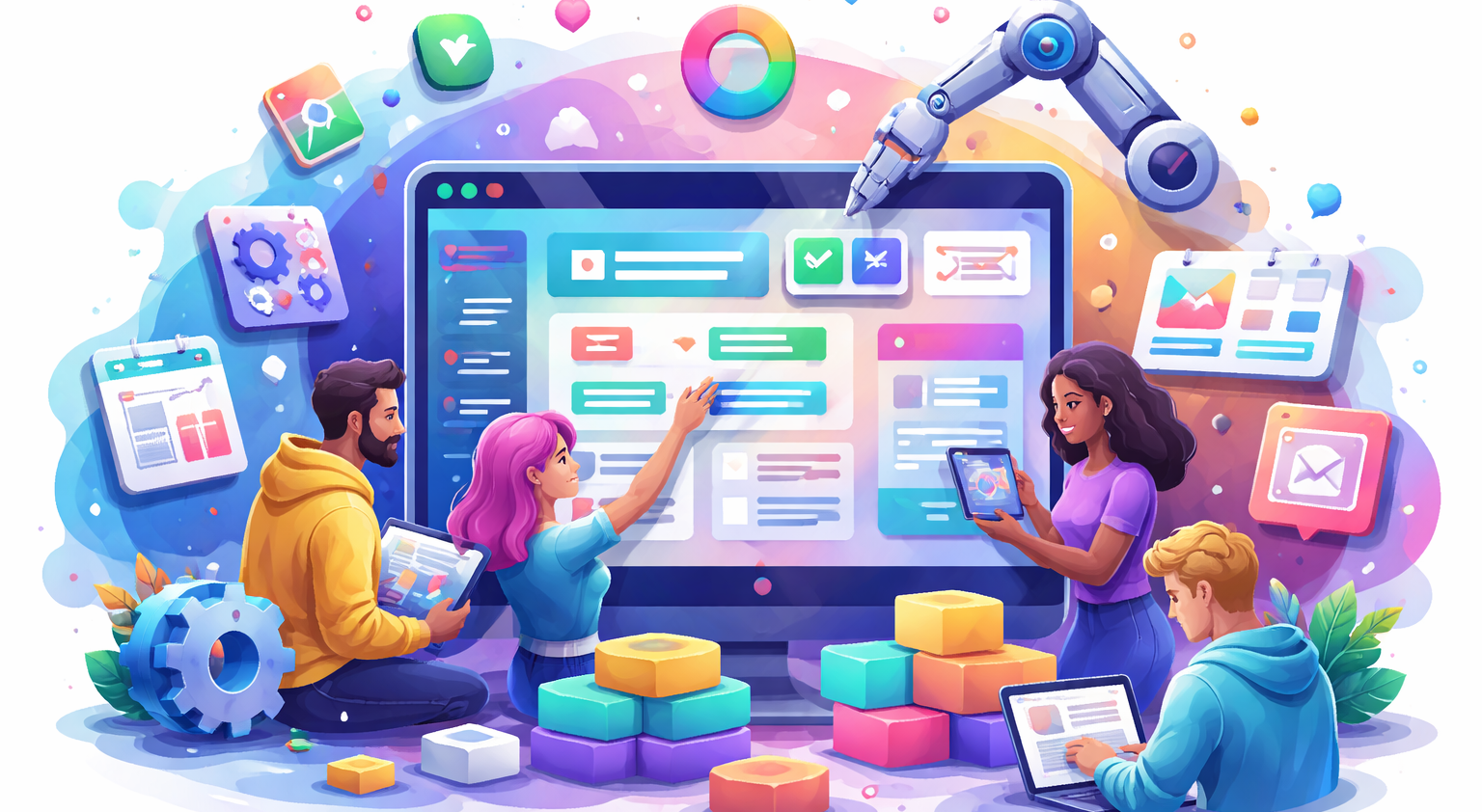
The way software is built is changing rapidly, and at the center of this transformation is the No-Code Revolution 2.0. What once required years of coding experience can now be achieved using visual tools, automation, and AI-powered platforms. In 2026, no-code is no longer just an alternative—it has become a core part of modern software development.
From startups and small businesses to large enterprises, organizations are adopting no-code solutions to build products faster, reduce costs, and empower non-technical users to turn ideas into reality.
This blog explains what No-Code Revolution 2.0 is, why it matters, how it works, and what it means for the future of technology.
🔍 What Is No-Code?
No-code refers to development platforms that allow users to create applications, websites, and workflows without writing traditional code. Instead of programming languages, users interact with:
- Visual drag-and-drop builders
- Pre-built components
- Configuration-based logic
- Automated workflows
No-code platforms abstract technical complexity and allow users to focus on what they want to build, not how the code works behind the scenes.
🧠 What Is No-Code Revolution 2.0?
The No-Code Revolution 2.0 represents the next generation of no-code tools.
No-Code 1.0 (Earlier Phase)
- Simple website builders
- Static landing pages
- Limited customization
- Minimal scalability
No-Code 2.0 (Modern Phase – 2026)
- Full-stack web and mobile applications
- Scalable SaaS products
- AI-powered logic and automation
- Enterprise-grade security
- Integration with APIs, databases, and cloud services
No-code has evolved from a basic tool into a serious development ecosystem.
⚙️ Why No-Code Is Growing So Fast in 2026
Several global trends are accelerating the no-code movement:
Key Growth Drivers:
- Shortage of skilled software developers
- Rising development costs
- Faster product launch requirements
- Startup and creator economy growth
- Digital transformation across industries
Businesses can no longer afford slow development cycles. No-code enables teams to build and iterate 10x faster.
🧩 How No-Code Platforms Work
Modern no-code platforms provide everything needed to build applications:
- Visual UI builders
- Database management
- Authentication systems
- Workflow automation
- Third-party API integrations
Users design logic visually, while the platform automatically generates and manages the underlying code.
This allows rapid development without sacrificing functionality.
🤖 Role of AI in No-Code Revolution 2.0
AI has taken no-code to a whole new level in 2026.
AI Enhancements in No-Code:
- Automatic UI generation
- Smart workflow suggestions
- Natural language app creation
- AI-driven optimization
- Intelligent automation
With AI, users can now describe what they want to build, and the platform helps generate it—making no-code more powerful and accessible than ever.
🏗️ What Can You Build with No-Code in 2026?
Today, no-code platforms can be used to build:
- Business websites
- Mobile applications
- SaaS products
- CRM and internal tools
- Workflow automation systems
- Dashboards and analytics platforms
Many startups now build entire MVPs and production apps using no-code tools.
👩💼 Who Is Using No-Code?
No-code is used by a wide range of people:
- Entrepreneurs and startup founders
- Product managers
- Designers
- Marketers
- Small business owners
- Freelancers
- Professional developers
Even experienced developers use no-code to prototype faster and automate repetitive tasks.
⚖️ No-Code vs Traditional Coding
| Feature | No-Code | Traditional Coding |
| Development speed | Very fast | Slower |
| Learning curve | Low | High |
| Cost | Lower | Higher |
| Flexibility | Limited | Very high |
| Scalability | Improving | Excellent |
No-code does not replace coding, but it significantly reduces the need for custom code in many scenarios.
⚠️ Limitations of No-Code Platforms
Despite its advantages, no-code has limitations:
- Limited customization for complex logic
- Platform dependency
- Vendor lock-in risks
- Performance constraints for very large systems
For highly complex, performance-critical, or custom systems, traditional coding is still necessary.
🧠 Does No-Code Replace Developers?
Short answer: No
Long answer:
- No-code replaces repetitive and low-level tasks
- Developers focus on architecture, logic, and optimization
- Demand for skilled developers continues to grow
No-code changes how developers work, not whether they are needed.
💼 Career Opportunities in the No-Code Era
The rise of no-code has created new career paths:
Emerging Roles:
- No-Code Developer
- Automation Specialist
- Product Builder
- MVP Consultant
- Workflow Designer
These roles combine business understanding with technical thinking, making them highly valuable.
🌍 Business Impact of No-Code Revolution 2.0
For businesses, no-code offers:
- Faster innovation
- Lower development costs
- Reduced dependency on engineering teams
- Rapid experimentation and iteration
Small businesses can now compete with large enterprises using no-code tools.
🔮 Future of No-Code Revolution 2.0
Looking ahead, no-code will continue to evolve:
- Deeper AI integration
- Hybrid no-code + low-code systems
- Enterprise-level scalability
- Better security and compliance
- Wider adoption across industries
In the future, no-code will become a standard layer of software development, not a niche solution.
🎓 Should Beginners Learn No-Code in 2026?
Absolutely.
No-code is ideal for:
- Beginners entering the tech world
- Entrepreneurs validating ideas
- Students building projects
- Non-technical professionals
Learning no-code builds product thinking, logic, and confidence—essential skills in the digital economy.
🧾 Final Thoughts
The No-Code Revolution 2.0 is reshaping who can build technology and how fast innovation can happen. By removing technical barriers, no-code empowers more people to create, experiment, and launch ideas at scale.
Traditional coding will always remain important, but the future of development is not code vs no-code—it is code + no-code working together.
In 2026 and beyond, those who understand both worlds will have a significant advantage.
🔗 Official References & Further Reading
For trusted insights on no-code and digital transformation, you can visit:
- https://www.weforum.org/topics/digital-transformation
- https://www.gartner.com
Note: If you can’t visit these links due to regional or network restrictions, don’t worry.
This article is based on publicly available research, industry trends, and real-world use cases.